WebScout
Year
2026
Tech & Technique
Python, FastAPI, React
Description
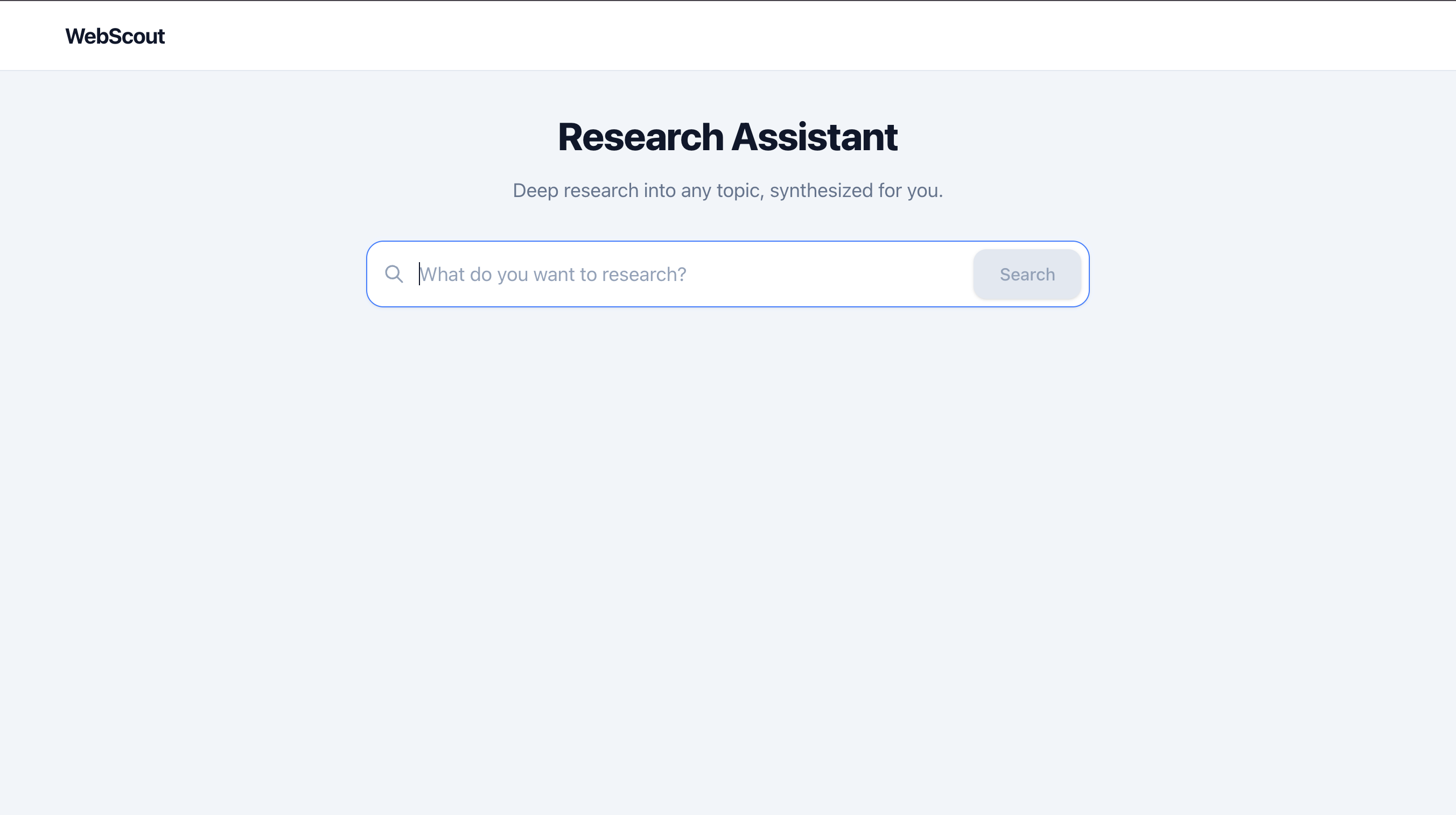
Built WebScout, an AI-powered research assistant that autonomously answers complex questions by planning, searching, filtering, and synthesizing answers from the web.
Key Features:
Technical Highlights:
Key Features:
- Intelligent Query Planning - Breaks vague queries into specific, searchable sub-questions
- Real-Time Web Search - Fetches live data from the web using Tavily API
- LLM-Based Content Filtering - Uses batch processing to identify relevant sources efficiently
- Comprehensive Synthesis - Generates well-structured reports with verifiable citations
- Hallucination Prevention - Grounds responses in real-time web data for accuracy
- Intent Classification - Differentiates between research queries and small talk to optimize API usage
- Sequential Search Design - Intentional approach for better relevance and control
Technical Highlights:
- Backend built with Python and FastAPI for high-performance API endpoints
- Modern React frontend for seamless user experience
- Tavily API integration for real-time web search capabilities
- Pydantic for structured outputs and data validation
- Stateless architecture for scalability and reliability
- Batch filtering optimization for efficient source evaluation
My Role
Full-Stack AI Developer
- Backend: Built FastAPI-based research agent with query planning system
- Search Integration: Implemented Tavily API for real-time web data retrieval
- AI Pipeline: Designed LLM-based content filtering and synthesis workflow
- Intent System: Created intent classifier to differentiate research from chat
- Frontend: Developed modern React/Next.js interface for research interactions
- Architecture: Implemented stateless, scalable design with separation of concerns
- Optimization: Built batch filtering system for efficient source evaluation