Yoga RAG
Year
2026
Tech & Technique
React, Node.js, Pinecone, MongoDB, Transformers.js, Google Gemini, RAG, Express.js
Description
Built an AI-powered Yoga Assistant using RAG (Retrieval-Augmented Generation) architecture for intelligent, context-aware yoga guidance with safety-first recommendations.
Key Features:
Technical Highlights:
Key Features:
- Unified LLM Review - Single point checks topic, safety, and intent
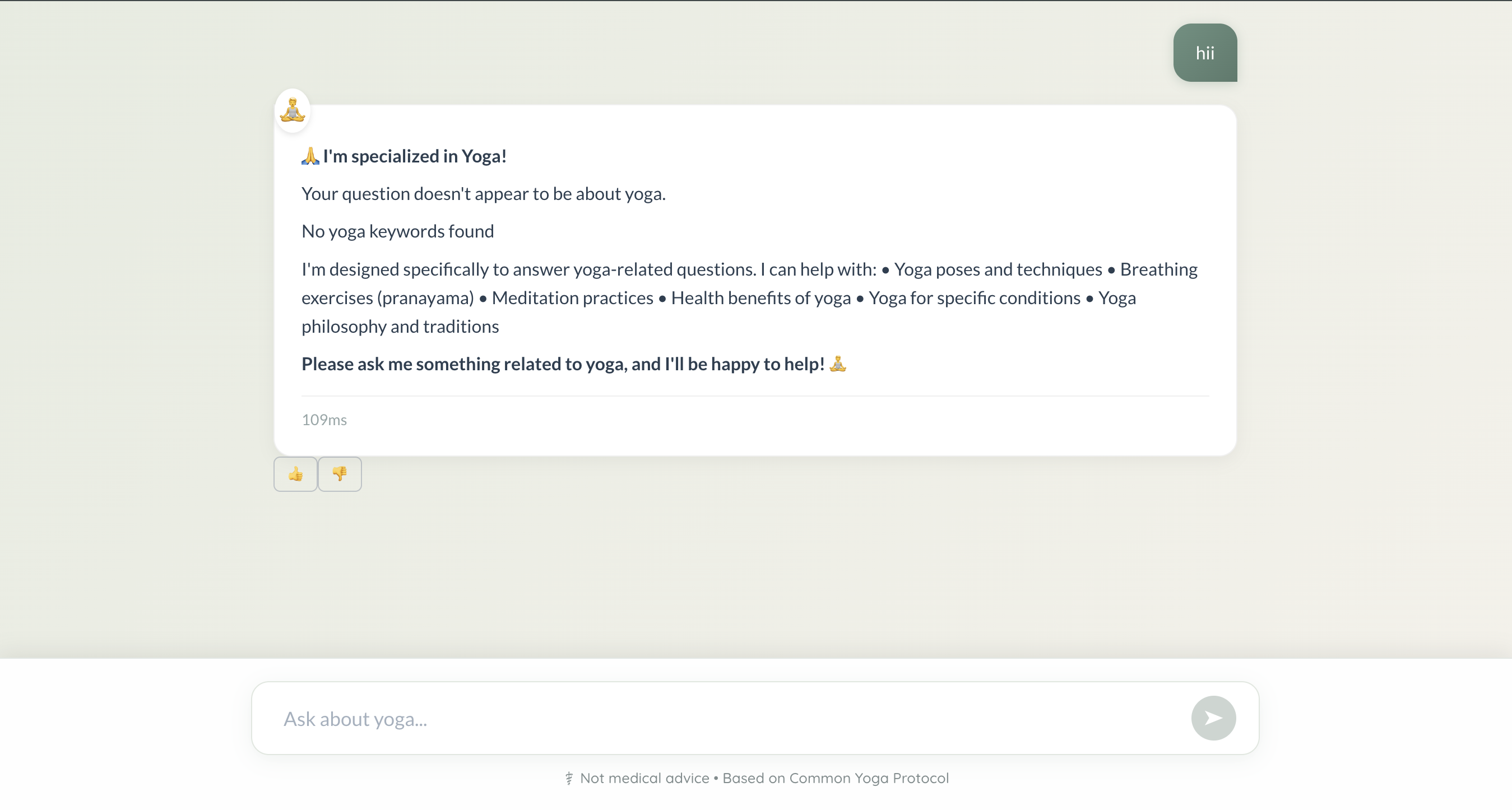
- Smart Query Classification - Handles greetings, off-topic, and medical queries
- Safety-First Design - Detects medical conditions with LLM + keyword fallback
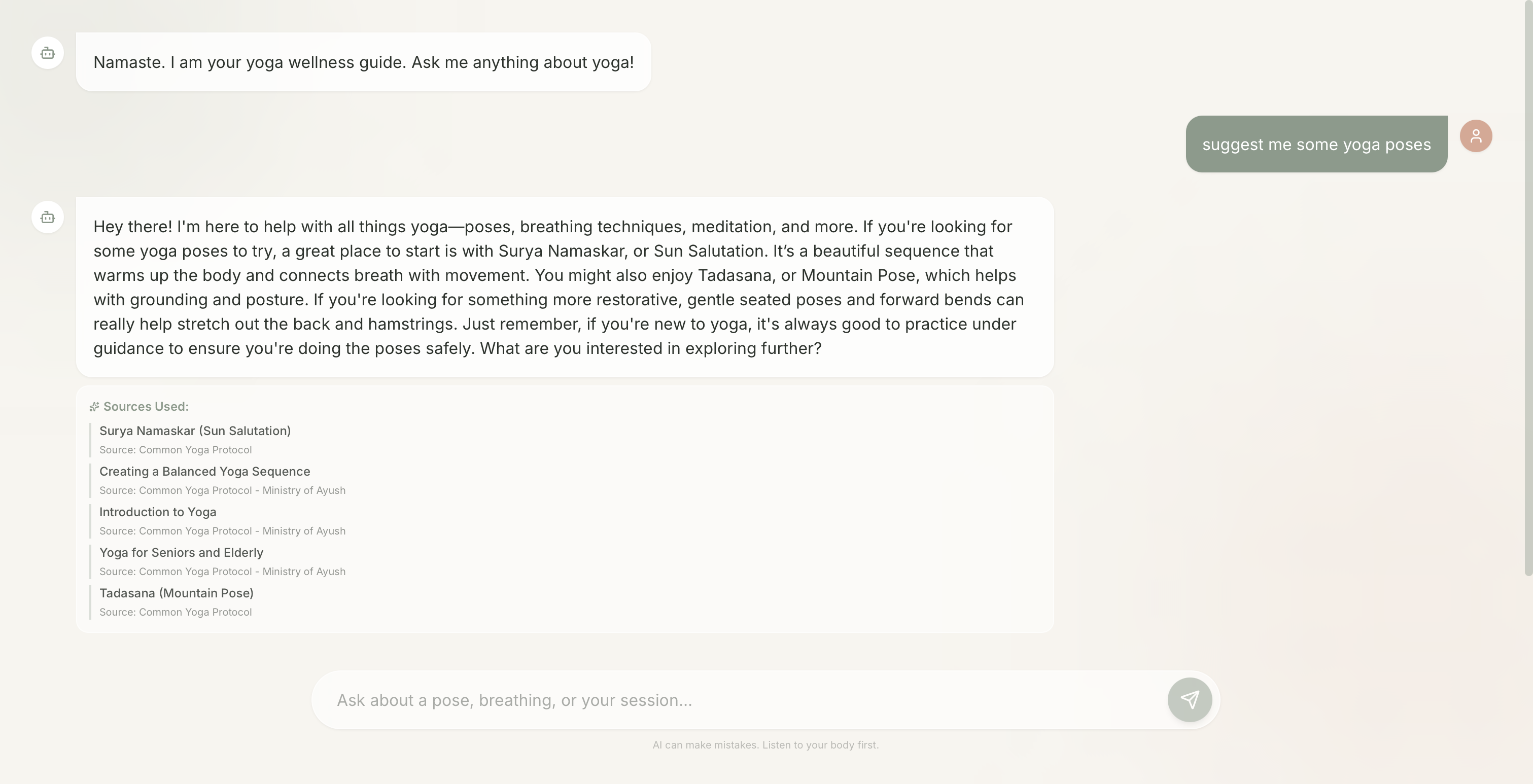
- Source Attribution - Every answer shows which articles were used
- Real-time Vector Search - Fast semantic search using Pinecone
- Zen Visual Theme - Calming Sage Green/Tan palette for stress-free UX
- User Feedback System - Thumbs up/down to rate answers
Technical Highlights:
- Full-stack RAG pipeline with React frontend and Node.js backend
- Pinecone vector database for efficient 384-dimensional embeddings
- Transformers.js for local, privacy-first embedding generation
- Google Gemini 1.5 Flash for intelligent response generation
- MongoDB for query logging and analytics
- 97% faster rejection of invalid queries (50ms vs 1500ms)
My Role
Full-Stack AI Developer
- Backend: Built unified query review system with LLM-based safety detection
- RAG Pipeline: Implemented vector search with Pinecone and Transformers.js
- Safety System: Created medical condition detection with keyword fallback
- Frontend: Designed calming Zen-themed React UI for yoga guidance
- Database: Integrated MongoDB for comprehensive query analytics
- API: Developed RESTful endpoints for Q&A, feedback, and stats